The full range of hip and knee replacement,done well, and refined further
Professor Lee is an NHS Consultant Arthroplasty and Sports Surgeon. The gold-standard repertoire is complete: total and partial knee replacement, total hip replacement, Birmingham Hip Resurfacing, patellofemoral arthroplasty, revision arthroplasty, kinematic alignment. His advances, SPAIRE and the Bikini approach on the hip, TWIS-TKR on the knee, grow out of that mastery, as proof of it, not in place of it.
A pioneering technique is only as good as the gold-standard operation it is built on.
The discipline that makes a routine replacement excellent is the same discipline that makes a refinement worth trusting.
A complete repertoire, applied with judgement
Hip and knee replacement is core, high-volume work for Professor Lee as an NHS Consultant Arthroplasty and Sports Surgeon. The whole range is on the table: total and partial knee replacement, total hip replacement, Birmingham Hip Resurfacing, patellofemoral arthroplasty and revision arthroplasty. The same mastery that makes those operations reliable is what his pioneering refinements are built on.
A full arthroplasty repertoire
Total and partial knee replacement, total hip replacement, hip resurfacing, patellofemoral arthroplasty and revision arthroplasty, the complete, well-proven range, performed to a high volume as an NHS Consultant Arthroplasty and Sports Surgeon.
Right operation, right joint
Partial vs total, cemented vs cementless, kinematic vs mechanical alignment, posterior vs anterior approach, the decision is made for this joint, not the average joint.
Advances that grow from the fundamentals
SPAIRE, the Bikini approach and TWIS-TKR are refinements built on mastery of the gold-standard operation, not a substitute for it. They exist because the fundamentals are secure.
Recovery is part of the operation
The day-zero plan, the prehabilitation and the structured return to function are built into the same decision, not added on after the fact.
Hip replacement, from gold standard to refinement
The foundation is the well-proven operation: primary total hip replacement, with cemented, cementless and short-stem fixation, and Birmingham Hip Resurfacing for selected younger, active patients where preserving femoral bone matters. Professor Lee trained through the Exeter Hip Reconstruction Fellowship and has published on the long-term success of hip resurfacing.
On that foundation sits the refinement. SPAIRE (Save Piriformis And Internus, Repair Externus) is a posterior approach that spares the piriformis and internus and repairs the externus, preserving the deep rotators and changing the recovery profile. Where the patient’s anatomy and activity profile favour an anterior or Bikini-incision approach, that is offered too. The approach is chosen for the hip, not the other way round.
Replacement or resurfacing
Total hip replacement in most patients; Birmingham Hip Resurfacing in selected younger, active patients where preserving femoral bone is the better long-term answer. Professor Lee has published on the ten-year success of hip resurfacing.
Approach
Posterior with SPAIRE soft-tissue preservation (deep rotators spared); anterior or Bikini-incision in selected patients. The approach is chosen for the patient, not the surgeon.
Stem, cup and bearing
Cemented, cementless or short-stem fixation on the published evidence and the patient’s bone quality; bearing material and size matched to the activity profile, with long-term wear and revisability in view.
Length, offset, anteversion
Leg-length equality, femoral offset and component anteversion are planned pre-operatively and verified intra-operatively, not left to feel.
Revision and complex hips
Revision of a failed or worn hip replacement, underpinned by the Exeter Hip Reconstruction Fellowship and complex-revision training.
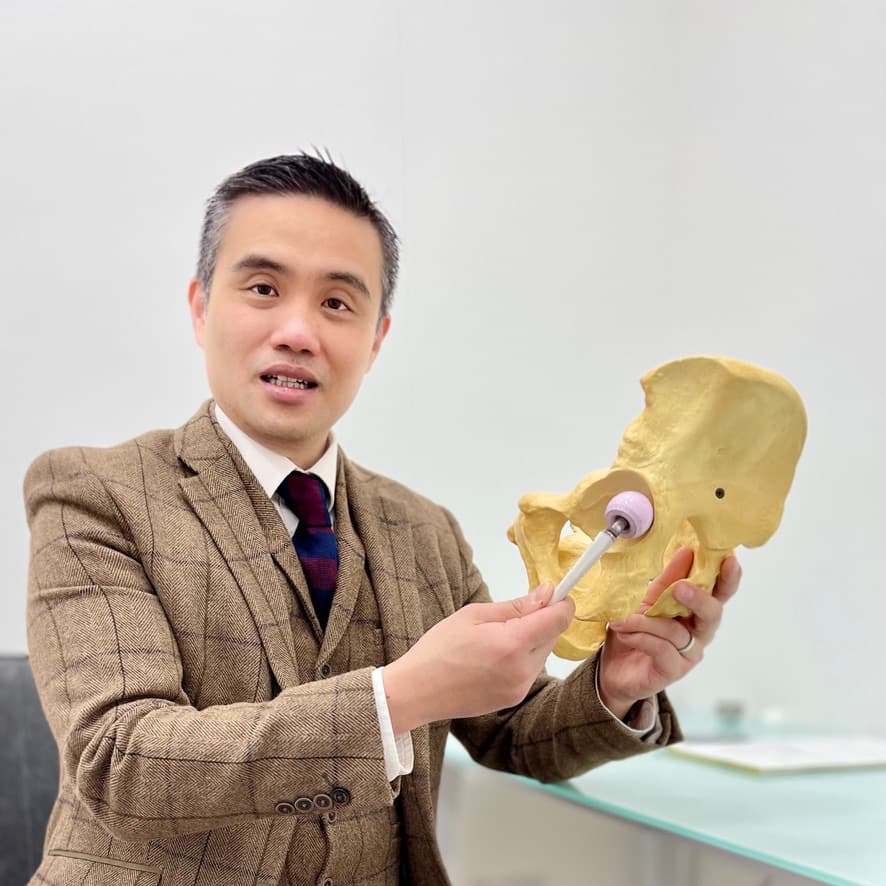
Knee replacement, decided for this knee
The conventional repertoire is complete: total knee replacement for generalised disease, unicompartmental (partial) knee replacement where it is confined to one compartment, and patellofemoral arthroplasty for isolated patellofemoral arthritis. Alignment is chosen by philosophy, mechanical, anatomical or kinematic, with robotic and computer-assisted guidance where it adds precision, and revision is handled with the same discipline as a primary operation.
TWIS-TKR is the refinement that grows from that base, detailed below. And where the joint may not yet need replacing at all, the preservation pathway sets out cartilage repair, biologics and image-guided injection as the parallel option. Each decision is made for this knee, on its own merits, not by default.
Total or partial
Total knee replacement where the disease is generalised; a well-selected unicompartmental (partial) knee replacement where it is confined to one compartment, preserving the rest of the joint and recovering quickly.
Patellofemoral arthroplasty
For isolated patellofemoral arthritis, targeted resurfacing of that single compartment rather than replacing the whole knee.
Alignment philosophy
Mechanical, anatomical or kinematic alignment, with robotic and computer-assisted guidance where it adds precision, chosen for the joint and the patient, not the marketing position of an implant.
Revision and complex knees
Revision of a failed or worn replacement, drawing on complex-revision fellowship training, treated with the same discipline as a primary operation.
TWIS-TKR
A specific knee replacement technique developed in Professor Lee’s practice; covered in detail in the dedicated TWIS-TKR section below.
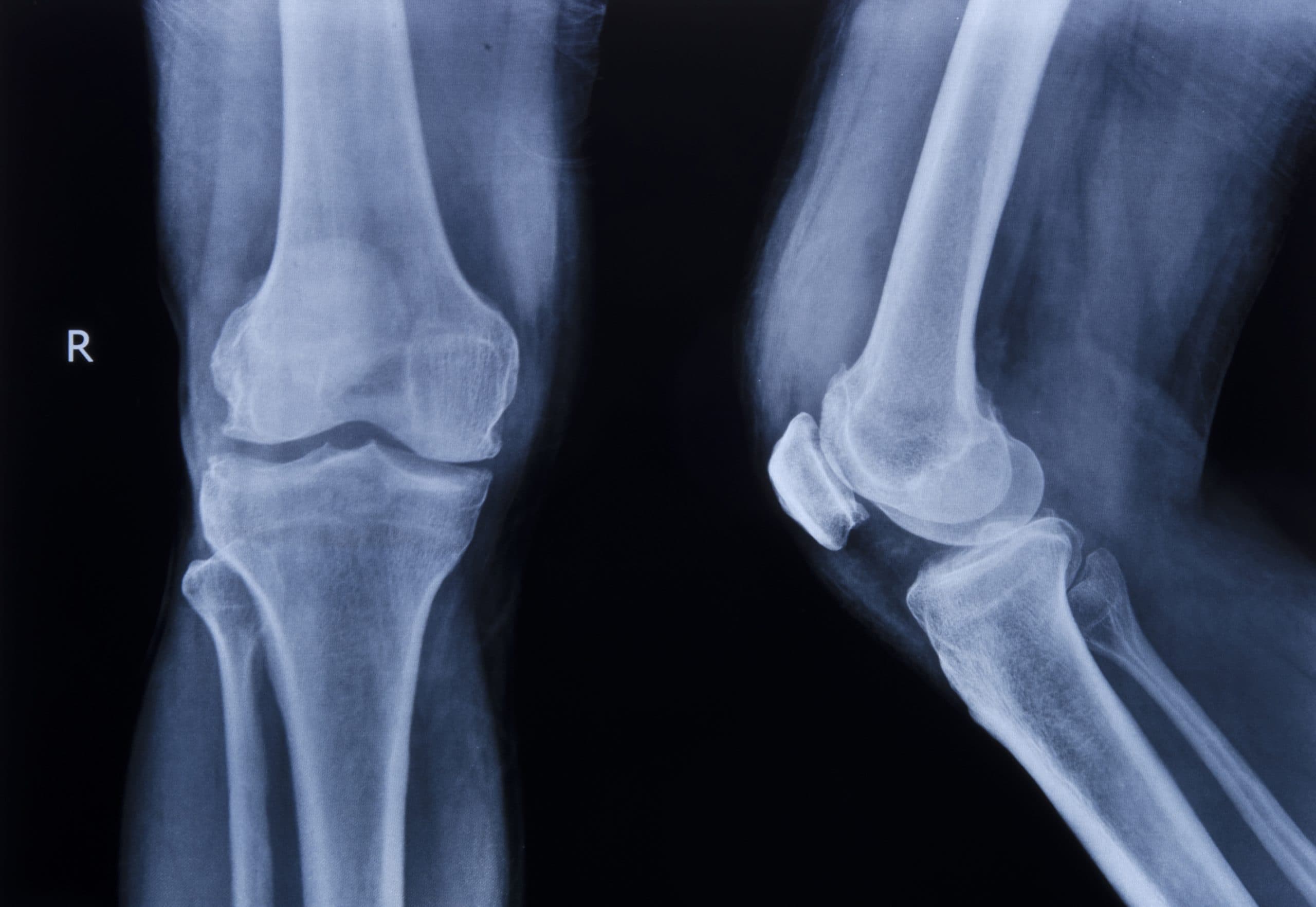
TWIS-TKR, a specific knee replacement technique
TWIS-TKR is a knee replacement technique developed in Professor Lee’s practice. It belongs in the same family of decisions as kinematic alignment and the patellofemoral discipline above: a way of approaching the operation that prioritises the natural movement pattern of the patient’s own knee.
A deeper write-up is in development. If TWIS-TKR is being considered for your case, or if you are a referrer who would like to discuss whether it fits a specific patient, the route is the same as for any other replacement decision: imaging review, written opinion, conversation.
Local Lincolnshire services, international referrals
A specialist hip or knee replacement opinion does not have to be local.
For international patients, the structure is the same as for UK patients: imaging review, written opinion, decision framework and, where surgery is the right next step, a clear pathway to the operation in London.
Local Lincolnshire patients are seen at Hip Replacement Lincolnshire and Lincolnshire Knee.
External
Hip Replacement Lincolnshire
Local hip-replacement service for Lincolnshire patients. SPAIRE technique preserves the deep hip rotators for faster real-world recovery.
External
Lincolnshire Knee
Local clinical service for knee treatments in Lincolnshire, including knee replacement decision-making and the partial-vs-total conversation.
Where the decision often goes next
Preservation, recovery and complex second opinions are where the replacement decision is most often refined or revisited.
Hip preservation and SPAIRE
Before replacement is the right answer, the preservation question. SPAIRE explained in detail (Save Piriformis And Internus, Repair Externus).
Read more
Cartilage and joint preservation
The preservation framework for arthritic knees, with biologics, injections and the question of when replacement may be too early.
Read more
Recovery and rehabilitation optimisation
The recovery layer is what makes a replacement work. Prehab, structured progression and Regen PhD systems thinking.
Read more
Common questions
The decision is made on patient anatomy, soft-tissue quality and the realistic recovery target. SPAIRE keeps the piriformis and internus attached and repairs the externus; the anterior approach preserves the posterior soft tissue. Both are valid in the right hands and the right hip. The wrong question is which approach is best in general. The right question is which approach is best for this hip, this anaesthetic risk profile, this activity goal.
TWIS-TKR is a specific knee replacement technique developed in Professor Lee’s practice. The dedicated section above outlines what it is and where it fits. A deeper write-up is in development; for now, ask directly if it is being considered for your case.
When the disease pattern is genuinely confined to one compartment of the knee, when the ligaments are competent, and when the patient’s activity profile rewards the faster recovery. The mistake is to pick partial because it sounds smaller; the right partial is a better operation than a borderline total, and the wrong partial is worse than either.
Yes. International referrals are welcome. The structure mirrors the UK pathway: imaging review, written specialist opinion, decision framework, and a clear route into London for the surgery itself. The recovery and follow-up plan is built around your home location.
Modern hip and knee replacements have strong long-term survivorship at 15 to 20 years and beyond when the operation is well-indicated, well-executed and well-rehabilitated. The honest framing is that survivorship in the literature reflects average operations; the joint in front of us depends on the implant choice, the surgical execution and the recovery layer, all three.
The operation that is right for this patient
Hip or knee, local or international
A written specialist opinion, the decision framework and a clear pathway to surgery in London. The full gold-standard repertoire, total and partial knee replacement, total hip replacement, hip resurfacing and revision arthroplasty, alongside the SPAIRE, Bikini and TWIS-TKR refinements.